
What Does String Tension Mean for Your Cello?
Expert Advice from Larsen Strings for Cellists
Expert advice from Dr Thomas Zwieg, Head of Product Development at Larsen Strings.
Larsen Strings

What is cello string tension?
Cello string tension is the pulling force in a string when it is tuned to the correct pitch. Every string needs enough tension to play its note, but the amount of tension can also influence how the instrument feels and responds.
Choosing the right tension is about finding a comfortable balance for your cello and your playing style, rather than simply choosing the highest available tension.
How does string tension affect your cello’s sound?
String tension can affect playing feel and how the cello responds to the bow. Too much tension may make some instruments feel restricted or less free to resonate. Too little can leave the response feeling less controlled, especially with certain bowing styles.
Every cello reacts differently. It helps to listen to the sound and notice how easily the instrument responds, rather than judging a string by its tension label alone.
Is higher tension better for cello strings?
Not necessarily. In the Larsen Strings Expertise video, Dr Thomas Zwieg cautions against assuming that more tension means more sound. On some cellos, excessive tension can seem to close down the instrument’s voice instead of helping it sing.
The aim is a clear, open sound that responds naturally to your bow, with enough freedom for the music you want to play.
Why start with medium tension cello strings?
Dr Zwieg recommends starting with medium tension and listening carefully to the result. It offers a useful starting point before exploring other options to suit your instrument and technique.
He explains that Larsen Il Cannone Warm & Broad and Direct & Focused are designed around a similar, moderate tension. This makes them especially useful when you want to adjust the character of individual strings without making a large change to the overall tension balance.
Watch: What Does Tension Mean for Your Cello?
In this Larsen Strings Expertise video, Dr Thomas Zwieg explains why tension matters, why he recommends starting with medium tension, and how Il Cannone strings let you explore different tonal colours.
Join Dr. Thomas Zwieg, for an exploration of issues, explanations and potential solutions.
Frequently Asked Questions About Cello String Tension
What does medium tension mean on a cello string?
Medium tension describes a string’s intended tension category at its specified pitch and vibrating length. It is a useful starting point, but labels are not necessarily identical between different manufacturers or string designs.
Will higher-tension strings make my cello louder?
Not automatically. Higher tension changes how a string feels and behaves, but a louder or better tone depends on the whole instrument, its setup and your playing technique.
Can strings with the same tension sound different?
Yes. String design and materials influence tonal character as well as tension. Larsen Il Cannone Warm & Broad and Direct & Focused are a good example of options with very similar tensions but different sound colours.
Can I mix Warm & Broad and Direct & Focused cello strings?
Yes. Larsen designed these Il Cannone cello strings to be interchangeable, so you can choose a different tonal character for individual strings while keeping a similar overall tension balance.
How do I know which cello string tension is right for me?
Start with a balanced medium-tension setup, then listen to the response across all four strings. Consider your playing style and the sound you want. A teacher, luthier or the Larsen team can help you explore suitable options.
Find the Right Balance for Your Cello
Your cello should feel free to sing. The right string tension is the one that helps your instrument respond comfortably while giving you the range of sound colours you need.
Can you change tone without changing string tension?
Yes. Two strings can have similar tensions but different tonal characters. In the Il Cannone cello range, Warm & Broad offers a fuller, warmer voice, while Direct & Focused is designed for clarity, focus and projection.
Because the matching Il Cannone strings have very similar tension values, you can explore a different sound colour while keeping the playing feel broadly consistent. The tensions are similar rather than exactly identical for every string.
Explore Larsen Il Cannone cello strings and compare the two tonal options.
How can you balance the A and G strings?
What if your G string sounds dull?
If your G string lacks brightness or definition, Dr Zwieg suggests trying the Il Cannone Direct & Focused G string. It may add some of the clarity you are looking for without requiring a substantial change in tension.
What if your A string sounds too bright?
If your A string sounds too bright or focused, consider the Il Cannone Warm & Broad A string. It is designed to bring more warmth and body to the sound while remaining close in tension to the Direct & Focused alternative.
These are examples, not fixed rules. The right combination depends on your cello, your bowing and the sound you want to hear.
Your sound. Your Story.

Larsen Strings Cello Guides
Use the quick links to view more detailed expert advice from Larsen Strings on how to get more from your instrument set up and how to clean and change your cello strings.

CELLO
Cleaning Strings

CELLO
Changing Strings

CELLO
About Tone

CELLO
About Tension

CELLO
Wolf Tones
Our Options for Cello
Versatility by design: finding your perfect blend.
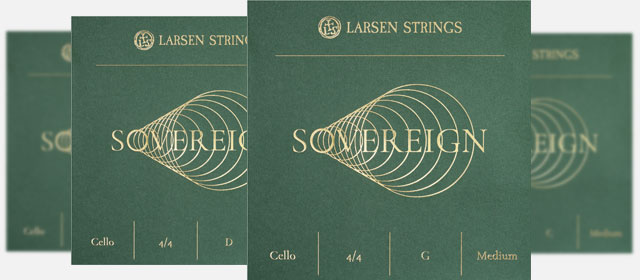
Sovereign
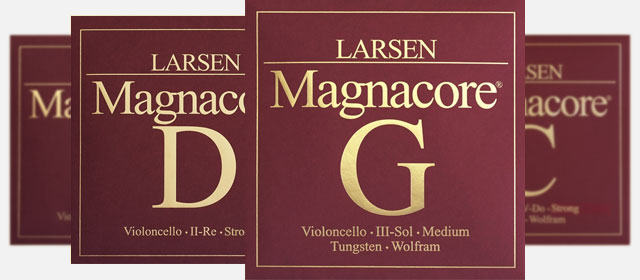
Magnacore ® Cello
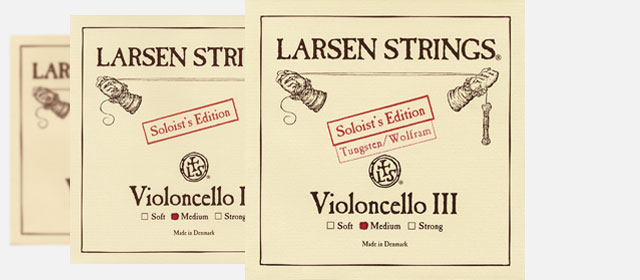
Soloist Cello
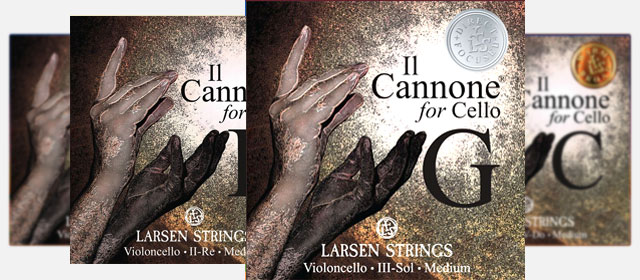
Il Cannone ® Cello
Arioso Cello
Original Fractional
Aurora Cello
Original Cello
Aurora Fractional
Meet the family
Please explore our extensive range of options for violin, viola & cello

Ingolf Nielsens Vej 14A , DK 6400, Sønderborg, Denmark.
Larsen Strings A/S has chosen to support the environment by upgrading to a CO2 neutral wind energy plan. Larsen Strings also supports UN World Goal 7 “Sustainable Energy” through its green choice.
