
How to Deal with Wolf Tones on Your Cello
Expert Advice from Larsen Strings for Cellists
Guidance as text and video from Dr. Thomas Zwieg, Head of Product Development at Larsen Strings.
Larsen Strings

How do you get rid of a wolf tone on a cello?
A cello wolf tone can often be reduced by adjusting bowing technique, reviewing the instrument’s setup, exploring a different string combination or carefully using a wolf eliminator. The best solution depends on the cello’s individual resonance.
What is a wolf tone on a cello?
A wolf tone is a note that wobbles, pulses or breaks up instead of sounding smooth. It can be frustrating, especially in a quiet passage, but it is not necessarily a sign that something is wrong with your cello. Even fine instruments can have wolf tones.
What causes a wolf tone?
Every cello has natural resonances that help give it its individual voice. When a played note is very close to a strong body resonance, the string and cello can interfere with one another. That is what creates the familiar uneven, growling sound.
Where do wolf tones occur on a cello?
Many cellists notice wolf tones around F or F-sharp, often on the G string. The exact note and how strongly it reacts will vary from cello to cello. Try playing slowly around the troublesome pitch to hear where the sound becomes unstable.
Watch: How to Deal with Wolf Tones on Your Cello
Understanding the behaviour of wolf tones becomes easier when the acoustic effects can be heard and demonstrated on an instrument. In this Larsen Strings Expertise video, we explore cello wolf tones and the considerations involved in managing their effect on the instrument’s response.
Join Dr. Thomas Zwieg, for an exploration of issues, explanations and potential solutions.
Frequently Asked Questions About Cello Wolf Tones
Is a wolf tone a sign of a bad cello?
No. Wolf tones can occur on excellent cellos and are often associated with strong natural resonances within the instrument. Their presence does not necessarily indicate poor craftsmanship or a defective instrument. What matters is how prominently the wolf tone affects playing and whether it can be controlled without compromising the cello’s overall sound.
Why is my cello wolf tone around F-sharp?
Many cellos have a strong body resonance close to the frequency of F or F-sharp. When a played note interacts with this resonance, the normal vibration of the bowed string can become unstable, creating the characteristic pulsating sound. The precise frequency varies between instruments.
Can a cello wolf tone disappear completely?
In some cases, a wolf tone can be reduced to the point where it is barely noticeable during normal playing. However, complete elimination is not always possible without affecting other aspects of the cello’s tonal response. The objective is usually to achieve the best balance between stability, resonance and musical expression.
Will different cello strings help with a wolf tone?
Different cello strings may influence how strongly a wolf tone is experienced because their construction, tension and response affect the interaction between the string and the instrument. While changing strings can sometimes improve the situation, the results are instrument-dependent and cannot be guaranteed.
Should I use a wolf eliminator on my cello?
A wolf eliminator may be worth considering if the wolf tone regularly interferes with your playing. The choice of device and its adjustment should take account of the cello’s individual resonance and overall tonal characteristics. Advice from an experienced luthier can help identify an effective solution.
Your sound. Your Story.

Larsen Strings Cello Guides
Use the quick links to view more detailed expert advice from Larsen Strings on how to get more from your instrument set up and how to clean and change your cello strings.

CELLO
Cleaning Strings

CELLO
Changing Strings

CELLO
About Tone

CELLO
About Tension

CELLO
Wolf Tones
Our Options for Cello
Versatility by design: finding your perfect blend.
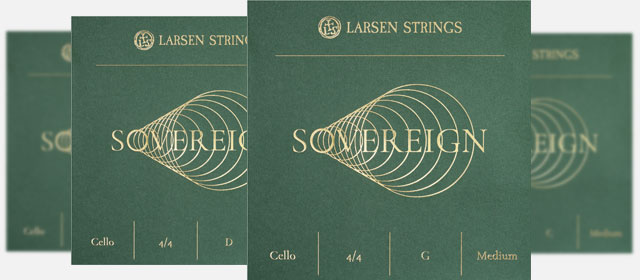
Sovereign
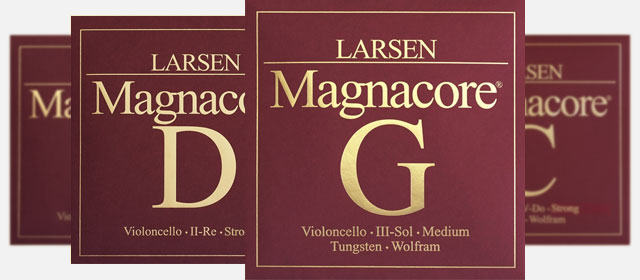
Magnacore ® Cello
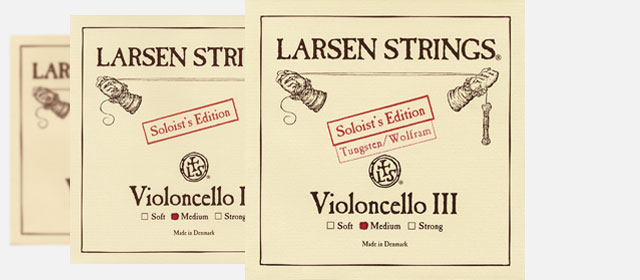
Soloist Cello
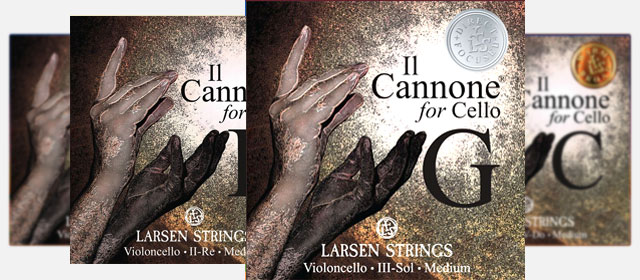
Il Cannone ® Cello
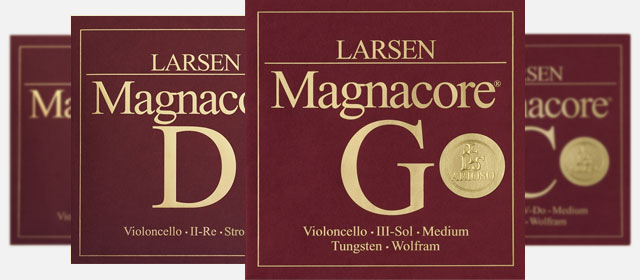
Arioso Cello
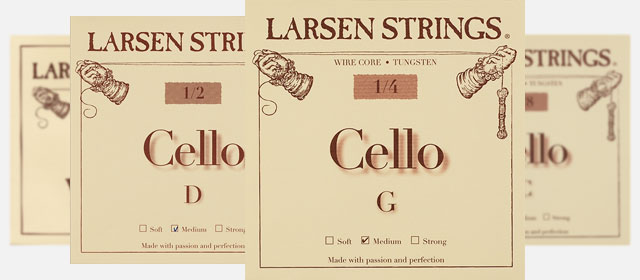
Original Fractional
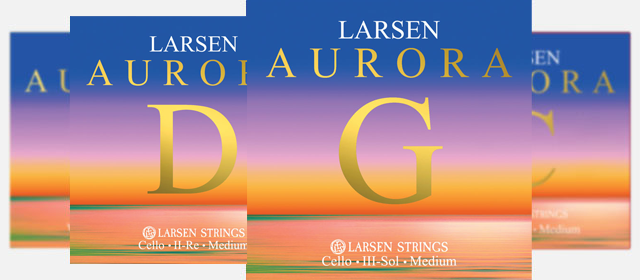
Aurora Cello
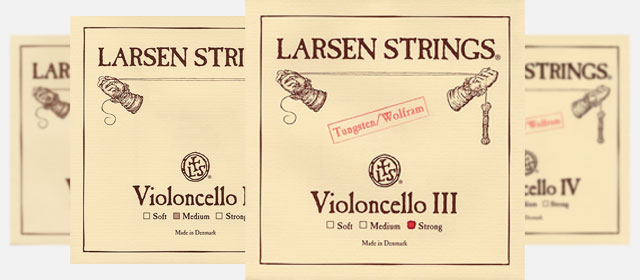
Original Cello
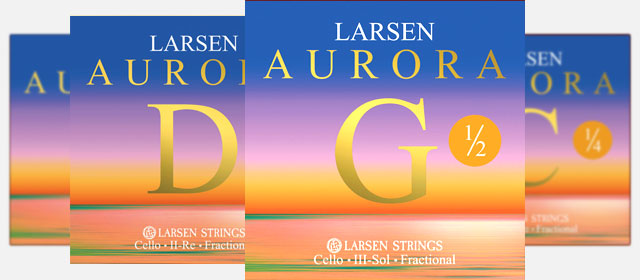
Aurora Fractional
Meet the family
Please explore our extensive range of options for violin, viola & cello

Ingolf Nielsens Vej 14A , DK 6400, Sønderborg, Denmark.
Larsen Strings A/S has chosen to support the environment by upgrading to a CO2 neutral wind energy plan. Larsen Strings also supports UN World Goal 7 “Sustainable Energy” through its green choice.
